

You have probably wondered at least once why products from China are often cheaper than products from India. At first glance, the answer seems simple: both countries have huge populations and large workforces. However, the difference in product prices depends not only on population size, but also on industrial development, infrastructure, logistics, and the way production is organized.
China and India are the two most populous countries in the world, but China’s economy is significantly stronger, better connected, and far more focused on mass production for export. For that reason, Chinese products are often cheaper and more widely available on the global market.
Below, we explain why products from India are generally not as cheap as those from China.
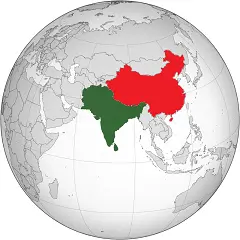
Both China and India have enormous manufacturing potential, but China has spent years building an industrial system that enables faster, larger-scale, and cheaper production. That includes developed industrial zones, better roads, ports, railways, energy supply, and a strong network of suppliers.
India has significant domestic market potential and a growing industry, but it still faces more obstacles when it comes to mass production. In many parts of the country, infrastructure is less developed, which makes transporting raw materials and finished goods more difficult. When logistics are inefficient, total production costs rise as well.
Chinese products are therefore often cheaper not because they are always better quality, but because they are produced in huge volumes with lower unit costs. Economies of scale allow manufacturers to reduce prices while remaining competitive.
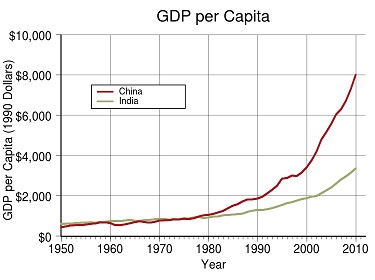
What makes the difference?
The first major difference is industrial infrastructure. China has a more developed system of factories, suppliers, ports, and transport routes, so production is more efficient from start to finish. When a product is made from components that are close together and easy to source, the price is lower.
The second difference is energy and transport stability. In India, many factories still face problems with power supply interruptions, slower transport, and weaker connections between smaller towns and industrial centers. This directly affects the price of goods.
The third difference is the financial system. China has a stronger and more organized system for financing production, so companies can more easily access capital to expand capacity, buy machinery, and increase output. In India, access to financing is more difficult for many companies, especially smaller manufacturers.
China has a more developed production chain
China is not just a country with a large workforce, but a country that has built an entire ecosystem for manufacturing. That means raw materials, parts, packaging, machinery, and logistics services are all part of a broader chain that works quickly and in an organized way. Such a system reduces costs and speeds up delivery.
In India, such a chain exists, but it is less connected and less uniform. That is why Indian manufacturers often have higher costs, slower production, and less ability to offer the same price as their Chinese competitors.
India is growing, but more slowly in manufacturing
India is a large and fast-growing economy, but it still cannot fully compete with China in mass industrial production. The government is trying to strengthen domestic manufacturing through programs such as Make in India, but the results are coming more slowly than the market expects.
As a result, Indian products often have higher prices than Chinese ones, especially in consumer goods, electronics, textiles, and industrial components. In the market, buyers often choose the cheaper option, which is why Chinese goods tend to sell more easily.
IndiaMART
IndiaMART is India’s largest B2B online marketplace connecting buyers with suppliers. The platform is important for domestic and regional trade, but in terms of global influence and scale, it still does not match the major Chinese B2B platforms.
IndiaMART makes it easier for buyers to find suppliers, offers a broader product range, and gives Indian companies better market visibility. Still, as with any B2B platform, buyers must carefully verify the company, documentation, and payment terms before placing an order.
In addition to IndiaMART, India also has other B2B platforms such as TradeIndia, ExportersIndia, Fibre2Fashion, and similar sites. These can be useful for finding suppliers, but they do not change the fact that Chinese industry still has the advantage in price, speed, and production volume.
← Back to: Business Essentials