

The Chinese internet is a completely different world – while in the West we use Google, Facebook, YouTube and WhatsApp, these apps simply don't work in China. Instead, a whole digital ecosystem has developed with its own rules and tools. If you plan to collaborate with Chinese partners, it's important to understand how that world works. In this article, we explain which Chinese alternatives exist for popular Western apps, what doesn't work, and why email is key to successful communication with China.
How the digital world works in China
China is special in many ways – from its economy and culture, all the way to the internet. If you've ever tried to search on Google, send a message via WhatsApp, or watch a YouTube video while in China, you quickly realised one thing: it simply doesn't work.
Welcome to a world that operates by its own digital rules, often called the "Great Firewall of China". Below we explain what the Chinese internet looks like, which apps work there, which don't and why, and when collaborating with China we insist that you communicate via email, not through apps like Viber or WhatsApp.
Chinese alternatives to Western apps
The same apps we use daily in the West don't exist in China. Instead, an entire parallel system of apps has developed that performs the same or similar functions, but is adapted to the local market and subject to Chinese regulations.
| Western app | Available in China | Chinese alternative | Explanation |
|---|---|---|---|
| Google (search) | ❌ | Baidu | The main Chinese search engine, adapted for local users, language, and regulations. |
| YouTube | ❌ | Bilibili, Youku | Platforms for sharing and watching video content, especially popular among younger audiences. |
| ❌ | A multi-purpose "super-app" for messaging, calls, payments, mini-apps, and business communication. | ||
| Facebook / Instagram | ❌ | Weibo, Xiaohongshu | Weibo is a mix of Twitter and Facebook; Xiaohongshu combines Instagram-style posts with product reviews. |
| Amazon | ✅ but unpopular | Taobao, JD | The largest e-commerce platforms in China; most consumers buy through these. |
| Google Maps | ❌ | Baidu Maps, Gaode Maps | Local maps with excellent coverage of Chinese cities and integration with local services. |
As you can see, almost every major Western app has a Chinese counterpart – but that doesn't mean using them is simple. Everything is based on the Chinese language, local infrastructure, valid Chinese accounts, and compliance with strict content and data rules.
What doesn't work in China?
Many global services we take for granted in the West are blocked in China or work only with a VPN, and even then unreliably.
- Facebook, Instagram, Messenger
- Telegram
- Viber
- Google Search and most Google services (Gmail, Drive, Maps...)
- Some cloud services such as Dropbox and OneDrive
When you try to send a message to someone in China via these apps, very likely nothing will happen. The message may appear to be sent, but it never reaches the recipient, or it arrives with significant delays and intermittent interruptions.
Even when they work partially through a VPN, this is not a stable environment for serious business communication. That's why we always recommend – for all important matters, use email.
Besides the most well-known sites, many other platforms may be blocked or restricted – especially those dealing with finance, trade, or topics Chinese authorities consider sensitive. If a site or service doesn't comply with internet security and data protection rules, it may be completely inaccessible from China.
Why we insist on email communication
Our office in China is sometimes contacted by clients via Viber or WhatsApp. These channels are simply not reliable – not because we don't want to use them, but because they don't work in the Chinese internet environment, or work only occasionally with a VPN, which creates additional technical difficulties for us.
That's why in business communication we always emphasise: write to us via email. Email is official, archived, easy to search, and can be used as a basis for quotes, invoices, and contracts. Everything important for collaboration with China must exist as a clear, verifiable record – this cannot be achieved through short messages in apps that don't work in that country.
Real-world example: A customer told us they sent an order via WhatsApp. The message never arrived. We lost two days in communication until we received everything – via email, of course.
WeChat – the Chinese digital world in one app
WeChat is not just a messaging app – it's a complete digital ecosystem that China uses instead of WhatsApp, Facebook, Instagram, and mobile banking combined.
- Messaging and audio/video calls
- Official accounts for companies and brands
- QR payments in stores and online shopping
- Mini-apps for reservations, food ordering, taxis, tickets, and much more
WeChat is an extremely useful tool if you collaborate with China, but its use by foreigners has limitations. For advanced features, account verification is required, linking with local users, and in some cases a Chinese bank account or phone number.
Practical tips for communicating with China
- For everything official – use email. Quotes, invoices, specifications, and contracts should go exclusively via email.
- For larger files, use services like WeTransfer or, by agreement, Chinese platforms (Baidu Cloud, etc.).
- Always agree on the communication channel with your Chinese partner in advance (email, WeChat for quick messages, etc.).
- Don't send only images – always add explanations, numbers, deadlines, and expectations.
- After sending an important message, ask for confirmation of receipt – especially if you're sending via services you're not sure work in China.
Paradox: a site about China, invisible in China
One often overlooked but important problem in doing business with China is that many sites advertising themselves as specialised in import, logistics, or intermediation with China – are not accessible from China itself. When a user from China tries to access such a site, they may receive a message like: "Country Blocked – Access to this page is forbidden".
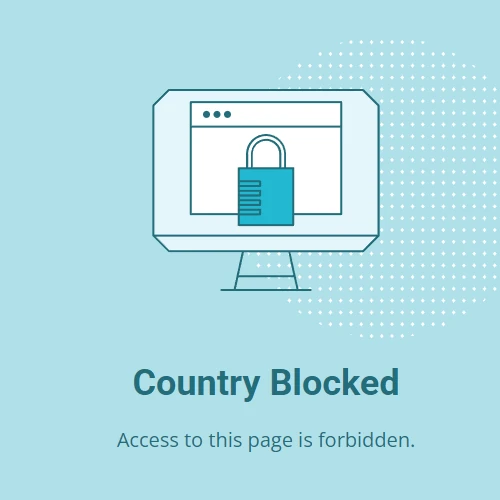
This situation raises an important question of trust. If a site offers services related to China but isn't visible to Chinese partners, it's logical to ask how truly connected to China that service is, and whether there is really operational presence on the ground.
Before deciding to collaborate with companies that present themselves online as "importers from China" or "specialised agents", we recommend checking the availability of their site from China. For this, you can use tools such as: WebsitePulse China Test or China Firewall Test (vpnMentor).
If a site is not accessible from Beijing, Shanghai, or Shenzhen, that's a serious signal that you should further verify how truly present the partner is in China – both online and offline.
Why don't we have Google reviews?
If you've tried to find reviews of our company on Google, you may have noticed there aren't any or they're limited. The reason is simple: Google and its services, including Google Maps and Google Business Profiles, are blocked in mainland China.
In China, Google reviews are not used; instead, local alternatives like Dianping or ratings on Baidu Maps are used. These platforms are relevant for local users but aren't visible to most of the international audience. That's why we mainly present our results and client experiences through direct communication, collaboration examples, and content on our site.
Similarly, our presence on Western social networks (Facebook, Instagram, X/Twitter) is minimal or non-existent, as these platforms are also blocked in China. Our partners, suppliers, and field teams operate in an environment where completely different tools are used – WeChat, Xiaohongshu, Weibo, and other local networks.
If it's important to you to verify our reputation, feel free to contact us – we can provide examples of successful collaborations, video material from the field, and contacts of clients who are willing to share their experiences.
Conclusion: the Chinese internet isn't less developed – it's just different
While in the West we rely on Google, Facebook, and WhatsApp, in China their roles are taken by Baidu, WeChat, and Weibo. The system is closed, but extremely functional – provided you know how to access it and which tools to use.
If you plan collaboration, import, or any business with China, accept one simple rule: use email for key business communication, and local apps (like WeChat) only as a supplement. This reduces the risk of misunderstandings and ensures your message actually reaches your Chinese partner.
For more practical tips on doing business with China, supplier verification, organising transport, and other topics, check out other articles on our site.
Frequently asked questions
Do WhatsApp, Viber, and Facebook work in China?
No. Most Western messaging apps and social networks, including WhatsApp, Viber, Facebook, and Instagram, are blocked in mainland China and don't work reliably even with a VPN.
What's the best way to communicate with a Chinese supplier?
Email is the safest and most reliable channel for quotes, specifications, and contracts. WeChat can be used for quick, informal messages, but shouldn't replace official email communication.
Can I use WeChat if I'm not in China?
Yes, you can install and use WeChat outside China, but for some features (e.g. payments), additional verification is required, often including a Chinese phone number or bank account.
How can I check if my site is visible from China?
You can use online tools to test the "Great Firewall", such as WebsitePulse China Test or China Firewall Test, which check site availability from multiple Chinese cities.
← Back to: Doing Business with China