

Hainan is the southernmost province of the People's Republic of China and the only Chinese island in the tropical zone. With an area of around 35,400 km² and a population of over 9 million, Hainan is comparable in size to Belgium, but differs completely from mainland China in climate, landscape, and lifestyle.
Thanks to its tropical monsoon climate, Hainan enjoys warm temperatures year-round, abundant sunshine, and lush vegetation, which is why it is often called the "Hawaii of China". It is especially popular as a winter destination, since while the rest of China is colder, you can still count on pleasant weather and sea on Hainan.
The provincial capital is Haikou in the north, while Sanya in the south is the best-known tourist destination. Sanya is known for its beaches, resorts, golf courses, and conference tourism, and that is where our business base is located.
In the island's interior you will find tropical rainforests, mountain ranges, and traditional villages of indigenous peoples (Li, Miao, and others), giving Hainan an additional cultural and ecological dimension. Alongside classic beach holidays, the island has in recent years positioned itself as a destination for golf, wellness, sports tourism, and conference tourism. Tourism has become one of the main drivers of the local economy.
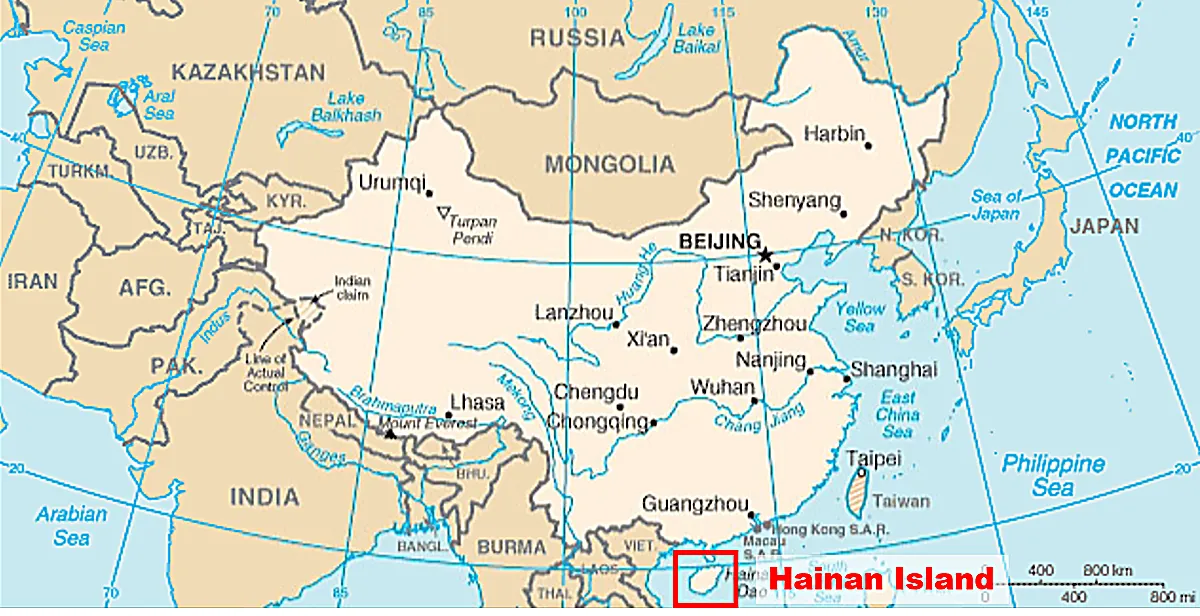
Hainan was once primarily an agricultural region, focused on farming and fishing. In the late 1980s, it became part of the wider Guangdong and Guangxi area, before being separated as a distinct province in 1988 and simultaneously declared China's largest special economic zone, marking the start of its modern development phase.
With a master plan published in 2020, an ambitious goal was set – to gradually develop the island into a fully open free trade port by the mid-21st century. In this framework, Hainan today holds a special place in China's strategy of opening up to the world.
Administratively, Hainan is divided into ten districts with ten major cities. Our company is located in Sanya, which is why the development of the Hainan Free Trade Port directly affects our business.
The Hainan Free Trade Port is a special regime that turns the entire island into a customs, tax, and regulatory special zone. For a detailed explanation of how it works, what benefits it offers, and what it means for exporters, see our dedicated guide: Hainan Free Trade Zone: Guide for Export to China.
Why We Moved to Hainan
The development of the Hainan Free Trade Port did not catch us by surprise. Even before the full package of measures was announced, the trend was clear: Hainan would become a key entry point for international companies seeking long-term presence in the Chinese market.
That is why, in 2019, we moved part of our operations from Guangzhou to Hainan, to the city of Sanya, and established our own companies there.
- Sanya AJ Global Trade Co., LTD – core role in modern business operations and market entry into China.
- Sanya Gabriel Import & Export Trade Co., LTD – primary activity in importing and exporting goods from China.
In practice, Sanya AJ Global Trade Co., LTD is focused on strategic positioning, business model development, and assessing whether Hainan makes sense for a particular product. Then Sanya Gabriel Import & Export Trade Co., LTD takes over the execution of imports, exports, and logistics.
Our presence on Hainan is not accidental. We recognized in good time that the island was becoming an important entry point for modern business with China, so we moved part of our activities there.
If you are primarily interested in how the Hainan Free Trade Port works and what it looks like in practice for exporters, we have covered this in detail in a separate article:
Hainan Free Trade Zone: Guide for Export to China
For international companies, Hainan represents a unique opportunity and significantly eases entry into the Chinese market through a more favorable regulatory and tax framework. That is exactly why our company headquarters is located in Sanya – in a location with a unique position: deeply connected to China, yet simultaneously open to the rest of the world, with a clear goal of efficiently linking these two markets.
← Back to: Doing Business with China