

In the previous article, we talked about China’s energy transition and its gradual shift toward renewable sources.
One important part of that shift was moving transportation toward cleaner fuels and lower-emission vehicles.
When it comes to the EV market, China is now ahead of major automotive powers like the US, Germany, and Japan.
New EV sales in China jumped by 82% in 2022, accounting for almost 60% of global sales.
According to the International Energy Agency, more than half of the electric cars on the road worldwide are now in China.
China also accounted for 35% of global EV exports in 2022, and BYD sold more electric vehicles than Tesla in the fourth quarter of 2023.
The big question is: how did they do it?
Chinese businesses tend to be very pragmatic.
When they realize they are behind in something, they usually don’t waste time trying to copy an existing technology step by step.
Instead, they often skip a stage and jump straight to the next level.
You can see this clearly in the way they approached payment cards.
In China, card payments never really took off.
Today, most payments are made by phone.
Since they arrived late to card-based payment systems, they didn’t want to copy someone else’s model, so they built their own mobile payment ecosystem instead – one that is now slowly making its way into other markets too.
They took a similar approach with cars.
They realized it would be very hard to compete globally in traditional gasoline cars with internal combustion engines, so they essentially skipped that stage and focused on the future: electric vehicles.
That direction fit perfectly with the government’s goals to reduce pollution, so China strongly backed the EV industry.
In this article, we’ll cover three key reasons behind the rise of China’s EV sector.
The Path BYD and Geely Chose
China started developing electric vehicles later than the United States.
Even though both countries had similar incentives for manufacturers and consumers, Chinese companies did not jump straight into EV car development at the beginning.
Elon Musk, Tesla’s CEO, used media very effectively to position his brand as the pioneer of the EV industry.
That helped Tesla first break through in California and then grow into a leader in the US and global EV market.
Instead of following the same path and targeting passenger cars right away, BYD and Geely stayed under the radar for a while and quietly experimented.
They started their EV work through related industries – electric buses and motorcycles.
Those products are less visible than passenger cars, but they face many of the same technical challenges.
What they learned there later gave them a real advantage in EV production.
Buses, for example, are heavier than passenger cars and carry more people.
On top of that, most buses in China run for up to 18 hours a day.
That means they need stronger batteries, better energy storage, and longer charging cycles.
By focusing on that segment, BYD started pushing battery technology forward as early as 2009.
It introduced electric buses as its entry product for the North American market.
Its first major fleet sale came in 2013, and in 2015 it delivered buses to the Los Angeles Metro system.
Today, BYD electric buses hold a significant share of the EV bus market in South America.
Geely took a different route through electric motorcycles, which require lighter and more portable batteries.
Experimenting in that space helped the company grow into an important battery manufacturer as well.
This indirect path helped BYD and Geely become EV giants, building know-how on both ends of battery technology – for heavy vehicles and for light, portable systems.
That is a big part of their competitive edge.
Growth Backed by Government Support

Electric taxi development in cooperation with local authorities
The second major reason China’s EV market grew so quickly is that manufacturers and local governments identified the biggest EV challenges early and worked together to solve them.
Government policy became a powerful tool for speeding up EV development and adoption.
Many European countries introduced tax breaks and registration discounts early on, but consumer interest still remained relatively weak.
That was probably because limited driving range and long charging times mattered more to buyers than environmental benefits, quieter operation, or lower maintenance.
China also introduced subsidies in 2009 for hybrid and electric cars and buses in 10 cities.
Passenger car subsidies ranged from RMB 4,000, or about USD 500, to RMB 60,000, or about USD 8,000.
But China did not stop at subsidies alone.
In 10 major cities such as Beijing and Xi'an, Chinese EV makers worked closely with taxi companies to develop practical solutions for battery technology and charging infrastructure.
They didn’t just decide where chargers should go – they also tested different charging schedules that matched real vehicle use during the day.
EVs with advanced batteries can run for up to eight hours in city traffic.
Taxi companies using electric or hybrid vehicles usually operate two fleets – one for the morning shift and one for the evening shift.
The morning shift finishes around 6 to 7 p.m., after work hours but before the evening rush.
That allows vehicles from the morning fleet to charge after 8 p.m., outside peak electricity demand hours.
The evening shift returns to charge between 2 and 3 a.m., when grid load is at its lowest.
This kind of schedule, developed together by EV makers and taxi companies, does not just help batteries.
It also helps smooth out electricity consumption across the city grid.
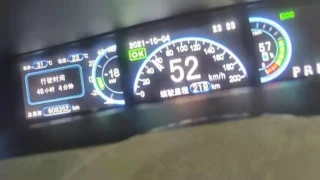
A few years ago, when Mr. Josip took a taxi in Beijing, the driver told him the EV he was driving had already covered more than 600,000 km in about five years and was due for a battery replacement.
You can see what an EV taxi fleet looks like in Beijing in the video above.
How They Built the Know-How

Electric taxi ride in Beijing
European, American, and Japanese carmakers had a much better starting position when it came to internal combustion engine technology.
China’s auto industry was far behind in that area.
As far back as 2002, Chinese carmakers estimated that battery costs would make up 30% to 40% of the total cost of a brand-new electric vehicle.
They realized that investing in batteries could give them a major advantage, because batteries are really what power EVs.
Estimates show that China has around 7% of the world’s lithium reserves, which is not enough to build a huge EV industry based only on domestic raw materials.
That is why one part of its strategy focused on investing in major lithium mines and processing plants around the world.
Today, China controls almost 60% of global lithium refining capacity for batteries, which shows how strong its position is in the supply chain.
By 2022, it was responsible for producing around 75% of all lithium-ion batteries used worldwide.
Another development path focused on building automotive know-how.
Chinese companies worked broadly with other carmakers and technology firms to strengthen their production capabilities.
When BYD began its EV journey, it moved from making batteries for mobile phones – supplied to Nokia and Motorola – into car batteries through Yadi Electronics, which later became part of BYD.
By acquiring Qinchuan Machinery Works, a small car company, BYD founded its automotive division in 2002 and started making its own vehicles.
It then worked with Daimler and Toyota to gain more vehicle production experience, while sharing its own battery manufacturing expertise.
BYD also works closely with Foshan Plastics Group on optoelectronics, meaning electronic sensors that detect and control lighting systems.
In 2018, BYD teamed up with Chinese tech giant Baidu to improve the software and service capabilities of its mass-market EVs.
That agreement equipped BYD vehicles with Baidu maps and intelligent driving software, while Baidu gained access to BYD’s open-source platform, hardware, and data.
Geely followed a similar path.
It built a system that stretches from low-orbit satellites to smart hardware for collecting and monitoring data that can improve EV battery performance.
It also entered a joint venture with Baidu called Jidu Auto, aimed at developing intelligent electric vehicles.
Geely then acquired the Australian automatic transmission company Drivetrain Systems International, which supplied brands like Ford, Maserati, and Chrysler.
Later, it took over Volvo and Lotus, and it also partnered with several other companies, including Daimler’s Smart.
This approach allowed BYD and Geely to quickly build all the pieces around their core strength – battery technology.
That is what helped them become two of China’s leading EV manufacturers.