

Since 2004, electricity consumption in China has been rising at an unprecedented pace because of rapid growth in the industrial sector. A serious power shortage in 2005 affected many Chinese companies. Since then, China has been investing heavily in power generation and supply to meet industrial demand and support continued economic growth. Installed power generation capacity in China reached 443 GW at the end of 2004 and 793 GW by the end of 2008. That increase over just four years was roughly equal to one-third of the total capacity of the United States, or 1.4 times the total capacity of Japan. At the time, most of that energy still came from so-called “dirty” sources.
China still accounts for about one-third of global carbon dioxide emissions.
It is followed by the U.S. with about 15%, India with 7%, Russia with 5%, Japan with 3%, while other economies each make up less than 2%. For a long time, the Chinese government largely ignored environmental issues because economic growth was the top priority. As a result, many of China’s largest cities were also among the most polluted in the world, especially when it came to smog.
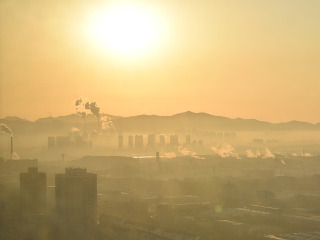
For years, China has faced pressure to speed up its green transition in the name of global climate policy, even if that comes at the expense of its own economic development. But when you look at total historical emissions since measurements began, according to Oxford University data, Europe has produced 30% of all carbon dioxide emissions so far, the United States about 25%, and China only around 13.7%. The conclusion is that China entered its rapid development phase only after global emissions had already become enormous and the climate crisis was already well underway.
For that reason, Chinese officials are not willing to make bigger concessions, because they believe they, too, deserve the right to a “dirty” and cheaper phase of development, just as Western countries had earlier in history. Still, this is not a problem China is sweeping under the rug. On the contrary, Chinese authorities are very aware of the scale of the pollution. They know that in 2013, air pollution in the city of Harbin was 40 times above the allowed limit, and that 16 of the 20 most polluted cities in the world were in China that year. The biggest causes were heavy reliance on coal for electricity generation, outdated technology, and the large number of cars.
China’s plans for a cleaner future
China shapes its development through five-year plans. These are the country’s social and economic development initiatives, published by the Chinese Communist Party since 1953. Planning is a key feature of China’s economy, and these plans set out detailed guidelines for national development. They cover everything from population trends to space exploration. Here, we will focus on the energy sector.
One of the first steps toward reducing pollution was set as a goal in the 11th Five-Year Plan (2006–2010), which called for a 20% reduction in total emissions of major pollutants over five years. That target was partly achieved by shutting down more than 2,000 factories that were major polluters. Just as importantly, starting with the 11th plan, every new five-year plan has aimed to move China away from energy production based on “dirty” fuels and to highlight investment in low-carbon technologies as a strategic emerging industry, especially in wind and solar power.
This helped China emerge as a global leader in renewable energy technology by the beginning of the 12th Five-Year Plan.
The 12th Five-Year Plan set a goal for renewables to make up 11.4% of total energy consumption during 2011–2015. It also called for the development of ultra-high-voltage (UHV) transmission systems to improve the integration of renewable energy from the point of generation to the point of use. The 13th plan raised China’s target for non-fossil energy to 15% for 2016–2020, and in September 2020, President Xi Jinping proposed the goal of making China carbon neutral by 2060.
Investing in environmentally friendly energy sources goes hand in hand with reducing China’s dependence on imported coal and oil. China is now the world’s largest importer of these fuels, so expanding renewables also means less reliance on imports. According to 2016 estimates, China ranked fourth in the world in coal reserves, with 149,818 million tons on its territory. But those reserves equal 34.7 years of annual consumption, which means the country has enough coal for only about another 35 years, which is why it is imported on a massive scale today.
Oil is an even bigger problem. China’s reserves are equal to 5.4 times its annual consumption, which means that without imports it would have only about five years of oil left, based on 2016 consumption levels and ignoring any unproven new fields.
In other words, China is seriously exposed when it comes to energy supplies, and a country that large cannot afford that kind of risk.
Growth in renewable energy
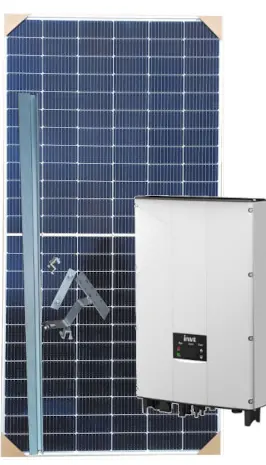
China has been the world’s largest and fastest-growing producer of renewable energy for more than a decade, and much of that growth comes from the rapid expansion of solar power and wind power in recent years.
Solar power production has grown exponentially over the years, reaching 330 TWh in 2021. Wind power is the second most important renewable energy source in China. From 2014 to 2021, cumulative installed wind capacity more than tripled to nearly 282 gigawatts. In addition, domestic hydropower consumption more than tripled between 2004 and 2021.
It is estimated that in 2023 alone, China built as much new solar capacity as the entire installed capacity of the United States.
China pledged in 2020 to reach 1,200 GW of renewable energy by 2030, but it is on track to hit that goal five years early. Analysts say China could have as much as 1,000 GW from solar alone by the end of 2026, out of the 11,000 GW needed globally to meet the goals of the Paris Agreement by 2030.
As a leading player in global solar markets, China’s photovoltaic manufacturing sector has become much more of a profitable industry in its own right, not just an environmentally driven project.
China is now the world’s largest supplier of renewable energy technologies and controls more than 80% of global solar manufacturing capacity.
On an annual basis, China can produce 1,000 GW of solar modules every year, which is currently twice the world’s demand.
This massive output has driven down the price of solar panels and related components, which worries the U.S. and other countries trying to build up domestic production. China has transformed itself from a manufacturer into an innovator in the renewable energy industry and will likely continue to shape this market in a major way in the future.
The environmental movement and the shift toward renewable energy have also reached the auto industry. In our next blog post, we will look at how China’s electric vehicle industry developed and why China is now the world leader in EV production.