

Importing a machine from China is often the best way to get quality equipment at a significantly better price – but only if the whole process is handled carefully and with proper quality control. In this article, using a real project as an example, we walk through how we helped a client buy a CNC machine from China – from the first contact with the manufacturer to delivery and commissioning.
Since this type of purchase is not just about price, but also about quality, lead times and transport, we will show what to pay attention to when buying a CNC machine from China and how the whole import process looks in practice, step by step.
Start of cooperation and choosing the manufacturer
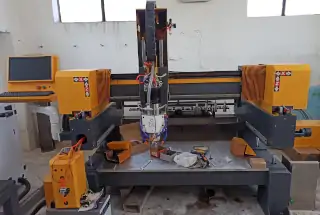
For obvious reasons, we won't share the company name or the owner's name, but we can show how the machine worked in the client's workshop, as well as how we supervised production in China.
The client contacted us because online offers were very inconsistent in terms of price and quality, and he wanted to avoid an expensive mistake. He sent us photos and a video of the machine he had in mind, a description of the work it needed to do, the required specifications and his target budget. Our task was to find a machine that met these requirements and to manage the entire purchase process safely.
After reviewing the specifications, we started contacting manufacturers and comparing quotes. For several days we spoke with different factories, and from the offers we received we selected the one that, in our opinion, offered the best balance of price and quality. We found a manufacturer who could build both machines at an acceptable price, which was also important for optimising transport costs.
The client was satisfied with the price, purchasing terms and the machines we found. However, since this was in the spring of 2020, at the start of Covid and the first lockdowns, he decided to wait. At the end of October he contacted us again and asked us to move forward.
Machine production and factory inspection
With any product made in China – and especially with a machine of this complexity – it's crucial to define all details before production starts so that there are no problems later. Over the next few weeks we negotiated technical details with the manufacturer, and we lost the most time on the tooling (cutters) used by the machine, which were made by another supplier.
Unfortunately, this back‑and‑forth took several weeks, and at that time no one knew that it would also affect the final cost of the project. The agreed production time was 30 days from the date the 30% deposit was paid. We agreed all the details and the manufacturer began building the machines at the end of November.
No one in November 2020 knew that by the end of the year container freight rates would explode and jump from the usual 2,100–2,500 EUR to around 5,000 EUR for a 20ft container.
During production we visited the manufacturer and filmed the factory, production process and machine testing. We regularly sent all photos and videos to the client. One of the videos can be seen below.
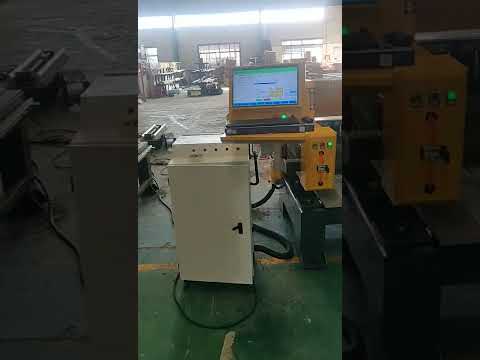
Footage from the factory inspection at the Chinese manufacturer
Transport, delays and costs
By early January 2021 the machines were finished and ready to ship. However, the provisional freight rate we had in November of around 2,400 EUR had to be updated. The actual price of transport is confirmed only once the goods are ready for shipment, and at that point it was around 5,000 EUR – the going market rate at the time.
This disruption in freight rates is still being felt today.
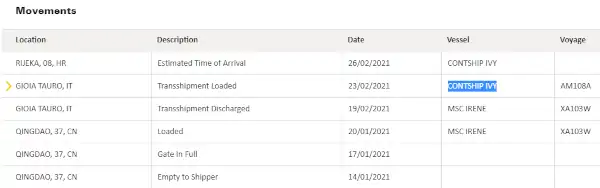
Both the client and our team were in two minds about what to do: wait a bit longer to see whether freight might drop, or ship immediately, since prices could easily go even higher. Chinese New Year was also covering a long holiday period. In the end we decided not to wait – we booked the first available container and the goods were shipped to Serbia, unfortunately only on 19 January 2021.
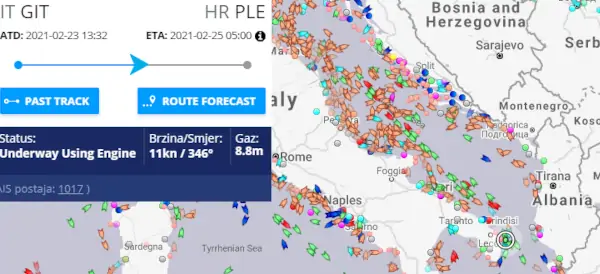
Once a container is loaded and shipped, you can track it yourself. The image below shows the moment when our vessel entered the Adriatic Sea.
The goods arrived in Serbia, were cleared through customs and picked up by the buyer. Import duty on new machines from China was 1%.
Today the machines are installed at the client's site and have been in regular operation for some time.
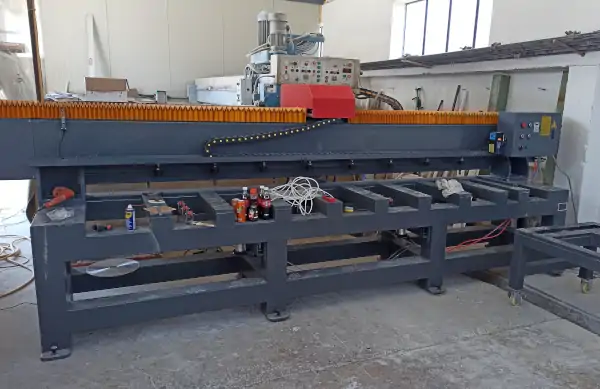
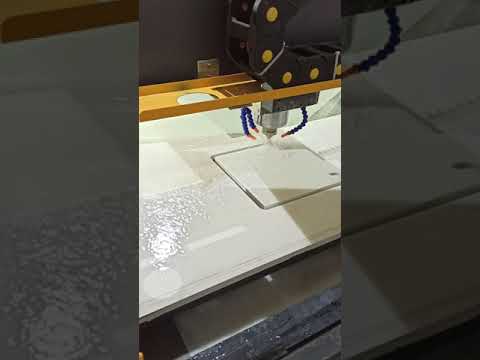
The machine in operation at the client's facility after delivery
Why the buyer was satisfied in the end
In China, the local RMB currency is pegged to the US dollar, while in Serbia the reference currency is the euro. This means that the RMB price expressed in USD tends to stay the same, unless there is a change in raw material prices or a major move in the RMB–USD exchange rate.
On 28 May 2020 we received a price from the manufacturer that the buyer accepted. The project was actually executed later that year. Although the USD/EUR exchange rate changed significantly between 28 May and 6 December 2020, the supplier did not adjust his USD price and stuck to the first quote from spring.
Here's how much the buyer saved just from the exchange‑rate difference:
- For goods worth 10,000 USD, the value in spring was 9,077 EUR, while at the end of the year the same 10,000 USD equalled 8,224 EUR – a difference of 853 EUR.
- For goods worth 20,000 USD, the value in spring was 18,155 EUR, while at the end of the year it was 16,448 EUR – a difference of 1,707 EUR.
- For goods worth 30,000 USD, the value in spring was 27,233 EUR, while at the end of the year it was 24,673 EUR – a difference of 2,560 EUR.
So for a machine order worth 30,000 USD, the saving on the USD/EUR exchange‑rate difference was 2,560 EUR – roughly the same amount by which the freight cost of one 20ft container had increased. The conclusion is that whether the goods had shipped in May 2020 or in January 2021, the total landed cost was roughly the same.
If we had started two months earlier and the goods had shipped in November, before freight rates spiked, this would have been a direct saving for the client. In reality, that "saved" money ended up covering the higher transport cost.
Even more important, however, was that the entire purchase process ran smoothly and safely. At every stage our client had clear feedback on what was happening with the machine production. When both machines arrived, they were in excellent condition, and the CNC machine even had more functions than the buyer initially requested.
Disruption in freight rates
By the end of 2020, freight rates had become two to three times higher than usual. A shortage of containers and a slowdown in economies around the world – except in China – were cited as the main reasons. On top of that, the pandemic meant that the most in‑demand goods were medical masks, gloves and similar products.
Several times we received forecasts that freight rates would fall. First we were told "we expect a drop after Chinese New Year", then "it should happen in May", and later that "it will likely drop in September". Instead of going down, freight rates kept rising.
Until Covid is fully under control in most parts of the world, container rates are unlikely to return to pre‑crisis levels. For an importer bringing in masks with a cargo value of around 300,000 USD per container, whether freight is 2,000 USD or 10,000 USD is almost negligible in percentage terms.
Pros and cons of buying machines from China
Many specialised machines simply aren't available on the local market, so they have to be imported.
The key advantage of importing machines from China is the price.
The savings can be substantial – some machines can be found at half or even a third of the price compared to other markets.
If you decide to buy a machine directly from China, you will usually pay less than if you bought it locally or from another country such as Italy or Germany. This primarily applies to new machines, as today very little is made outside China.
If you decide to buy a machine on your own, without an agent, pay close attention to every detail of the deal. Let's say you found a great price and the machine looks perfect in the photos, with a supplier who has been on Alibaba for years and has strong references. You decide to order the machine directly – but once it arrives, you realise it's not what you expected.
Make no mistake: if there is room to cut corners, someone will cut them.
A low price often comes with no installation or user instructions, or you only get a manual in Chinese. The machine may lack proper certificates, the materials used may look poor, and the overall finish can be rough.
The machine may work badly, be difficult to adjust – or in the worst case, not work at all.
What then? Who do you complain to?
So if you are buying on your own, do not let price be your only decision factor.
Without an agent – someone who represents your interests – you should never buy the cheapest machines you find on Chinese platforms.
Many importers buy machines in China and resell them on their local markets. If you don't work with an agent, it may be safer to buy from them instead.
If you are planning to import machines from China and want a team on the ground to manage the process for you, contact us.
If you want to see what can happen when production is not monitored from the very beginning, read our article What happens when there is no quality control during production.
Frequently asked questions
How long does it take to import a CNC machine from China?
Depending on the machine's complexity and agreed production lead time, the whole process – from order confirmation to arrival in your country – usually takes between 60 and 120 days. This includes production, any in‑factory inspections, booking of transport, sea transit and customs clearance.
Is an in‑factory inspection mandatory?
It's not legally mandatory, but in practice it is one of the most important protections for the buyer. Without an inspection at the factory, you risk discovering problems only at loading or upon arrival, when fixes are more expensive and slower.
What are the typical freight costs for a CNC machine from China?
Freight costs depend on the machine's size and weight, the port of loading and current market conditions. In stable periods, the cost of a 20ft container can be much lower than during disruptions like those seen in 2020/2021.
What are the main risks if I buy a machine directly, without an agent?
The most common risks are mismatched specifications, lower‑than‑expected quality, missing documentation and certificates, and issues with installation and commissioning. Without local quality control, it is hard to fix problems before the machine leaves the factory.
Does importing a CNC machine from China really pay off?
In most cases it does, thanks to the lower purchase price – but only if specifications are clearly defined, quality control is done properly and freight and import costs are optimised. Otherwise, any savings on price can easily be eaten up by additional costs and downtime.
← Back to: Our Projects