

132nd Canton Fair opens for virtual visitors on October 15.
This platform is for anyone looking to source products from China, or for importers who want to see the latest things China has to offer. It is a chance to discover new trends in specific product categories, look for ideas for your own business, build long-term business relationships with major Chinese suppliers, and get their contact details.
The fair showcases products such as electronics and home electrical appliances, lighting equipment, vehicles and spare parts, machinery, hardware and tools, and more.
This year, the national pavilion features more than 2.4 million products across 16 categories and 50 exhibition sections, covering almost every type of Chinese export product. The international pavilion presents 6 themes spread across 50 sections.
Compared with previous fairs, this edition offers a larger exhibition scale, a longer service period, and more complete online features, giving buyers around the world a trading platform that works across time zones.
Larger exhibition scale
The 132nd Canton Fair expanded its exhibitor base to give global buyers more choice and added 10,000 new exhibitors to the original 25,000.
Companies from different industries are showcasing some of the best of Chinese manufacturing currently available online.
At the same time, the 132nd Canton Fair will continue to develop its cross-border e-commerce zone and create synergy with e-commerce platforms. In that sense, the fair continues to promote cross-border e-commerce, and 5 cross-border e-commerce platforms will join the Canton Fair activities.
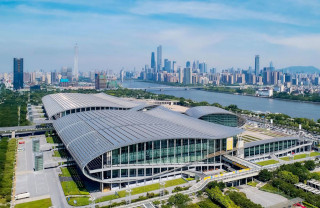
The China Import and Export Fair Complex, also known as the Guangzhou International Convention and Exhibition Center (the Canton Fair complex), is the largest modern exhibition center in Asia and is located on Pazhou Island, Guangzhou, China.
It is a perfect blend of human achievement, environmental protection, and advanced technology. The complex covers a total building area of about 1,100,000 m².
Zone A has an indoor exhibition area of 130,000 m² and an outdoor exhibition area of 30,000 m². Zone B has an indoor exhibition area of 128,000 m² and an outdoor exhibition area of 13,600 m², while Zone C has an indoor exhibition area of 80,000 m².
Longer service period
Starting with the 132nd Canton Fair, the website will provide services for half a year.
From October 15 to October 24, exhibitors and buyers can take part online on the official website. From October 24 to March 15, 2023, all other functions will remain available except live streaming and appointment booking, so buyers can easily find products, meet exhibitors, and make use of new technology features.
More complete online features
The official website has been further improved for the 132nd edition of the fair. The search function has been upgraded, and buyers can filter exhibitors by their export markets.
A number of new real-time communication features make networking and trade matching much easier and more efficient.
For more information, visit the official fair website: [https://www.cantonfair.org.cn/en-US](https://www.cantonfair.org.cn/en-US)
The official website of the 132nd Canton Fair is already live.
Supplier Guide
Finding and verifying suppliers
How to systematically find suppliers and check whether they’re truly reliable before you start working together.
How to choose a manufacturer in China
Practical criteria for choosing a factory once you’ve narrowed down your supplier list.
The Most Cost-Effective Way to Buy from China
Compare three buying options - cheap(B2C), cheaper(bulk on Alibaba), and most cost-effective(local factories + China agent).
How to Negotiate with Chinese Suppliers
A practical guide to negotiating with Chinese suppliers, with a focus on preparation, cooperation terms, and getting the right price.
MOQ and hidden import costs
What MOQ means, how to negotiate it, and which additional costs you should plan for before ordering.
Choosing Products to Import from China
Go back to our guides on finding profitable products and learn which regions of China specialize in different product categories.
← Back to Product SelectionCustoms and Import Regulations
Once you've selected a supplier, the next step is understanding HS codes, customs duties, product origin requirements, and the paperwork needed for importing.
Continue to Customs →Back to: ← China Supplier Guides
Back to: ← China Sourcing Hub