

Importing from China on Your Own – Where to Start
These days, there are basically two completely different ways to buy from China online. The first is retail – ordering single pieces from sites like AliExpress, Temu, or Shein, where you’re the final customer. The second, which is what this site is about, is wholesale importing for companies and entrepreneurs – buying directly from Chinese suppliers and clearing goods through customs by the book.
This article is a short guide for those who want to start importing from China on their own: how to find a supplier, which steps to pay attention to, and where the biggest risks are. You’ll find a more detailed guide in the China sourcing section.
We can also help you find suppliers and ship goods from China. If you’d like support or want to outsource part of the work to our team in China, contact us.
Below is a shortened “getting started” guide, but if you’re doing this for the first time, we strongly recommend reading through the whole site before you pay a deposit or sign a contract with a supplier.
Buying from China Without an Agent
There are many websites where Chinese companies showcase themselves and their products. Our go‑to recommendations are Alibaba and Made‑in‑China, the two biggest and most well‑known B2B platforms.
On our site, in the Chinese suppliers section, you’ll find extra tips on how to choose and check suppliers before you work with them.
In the past, we also kept a directory of Chinese companies by industry, just to help people get oriented. Between 2010 and 2014 we listed 11,720 Chinese companies. During our latest review in 2023, we found that over 60% of those sites had disappeared, changed owners, or no longer pointed to a relevant company.
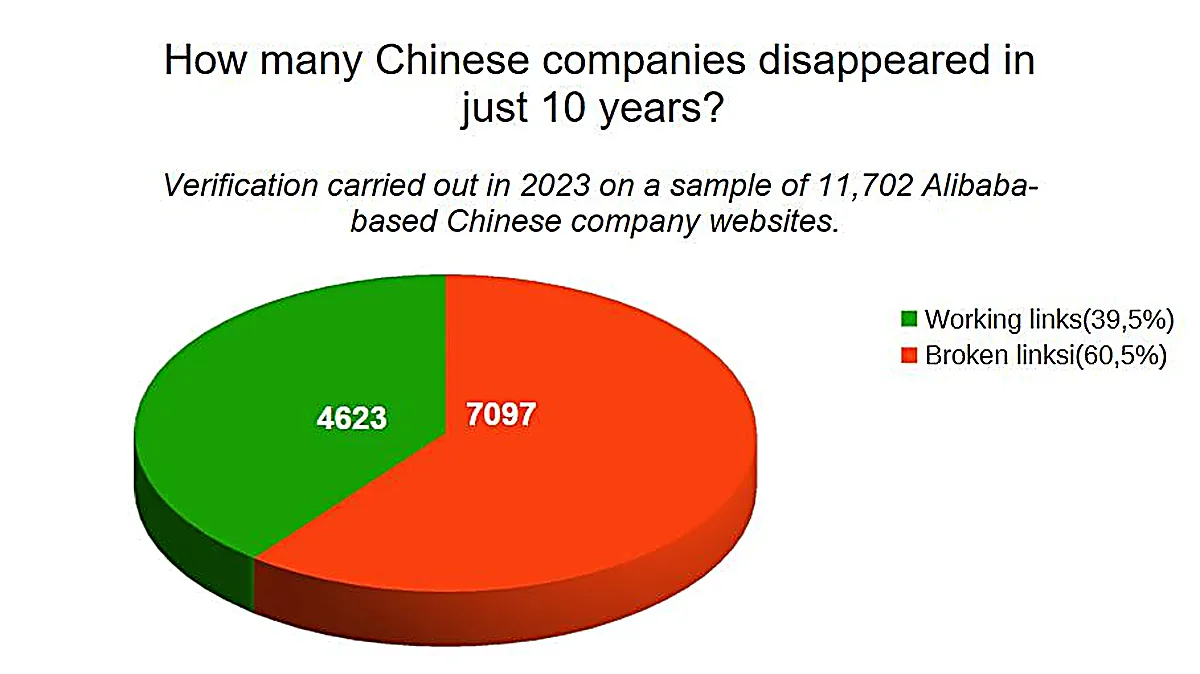
Numbers like this show how fast suppliers and websites change. If you plan to import on your own, don’t rely on old lists and random links – always verify each company through multiple sources before you send any deposit.
If you want to reduce risk and speed things up, contact us and let our team in China handle some of the checks and communication for you.
Steps for Importing from China on Your Own
-
Define your product and check demand.
Start with basic market research and clearly define what you want to import. Don’t pick a product just because you personally like it – check demand, competition, and regulations (whether there are any special permits or certificates required). You can read more about choosing products in the Product selection section.
-
Find and vet suppliers.
Pick a few suppliers and start talking to them. Briefly introduce your company and market, ask how long they’ve been in business, which trade fairs they attend, and who they already work with (especially if they have customers from your country or region).
Try to double‑check everything they tell you – with online research, certificates, and references. Never send money to a company you haven’t properly verified. You’ll find more guidelines in the Suppliers from China section.
-
Request samples and test quality.
Before placing a larger order, ask for product samples and go through them carefully: quality, functionality, packaging, instructions for use, and anything else that matters to your customers. Samples usually aren’t free, but a problem with one box is always cheaper than a problem with a full container.
If you want extra peace of mind, consider an inspection before shipment. You can read more about this in the Quality control section.
-
Understand delivery terms (FOB, CIF, etc.).
Before ordering, agree with your supplier on delivery and shipping terms. In practice, you’ll mostly see FOB, CIF, and EXW. These terms affect price, risk, and who arranges the freight, so it’s important to understand them before signing anything.
You’ll find a more detailed explanation of delivery terms and shipping options in the Shipping from China section.
-
Agree on payment terms.
Typically, suppliers ask for around 30% deposit to start production, with the remaining 70% paid after production is finished – either before shipment or against a Bill of Lading as proof that the goods were handed over to the carrier.
Payment terms can be negotiated. For larger orders or first‑time deals, consider safer payment methods (letter of credit, escrow, Trade Assurance), backed by clear contract terms.
-
Check customs, paperwork, and import rules.
As the importer, you’re responsible for making sure the goods can legally enter your country. Before you order, check whether the product is allowed, which certificates and documents your authorities require, and what duties and VAT you’ll pay.
You can read more about customs procedures and documentation in the Customs and documentation section.
-
Choose a freight forwarder and plan shipping.
Ask around locally and pick a freight forwarder you trust. Clarify with them in advance all costs related to customs, transport, storage, permits, and other import‑related fees.
Ideally, your freight forwarder should be involved before you sign a contract or pay a deposit, so you have a realistic picture of the total cost of shipping from China.
-
Consider pre‑shipment inspection.
For the first shipments, it’s especially useful to hire an independent inspection company that will visit the factory and check the goods before they leave. Ask them for their standard checklist, and prepare your own list too (quality, packaging, labels, quantities, etc.).
-
Track the shipment, customs clearance, and delivery.
Your freight forwarder handles transport and customs, but you should still track the shipment: whether the goods were loaded, when they’re due to arrive, if the paperwork is complete, and whether all costs are clear. Timely information often prevents unpleasant surprises.
-
Receive the goods and keep all documents.
Once the shipment is cleared and arrives at your warehouse, organize unloading and check both quantity and quality. Keep all invoices, shipping documents, customs declarations, and certificates – you’ll need them for accounting and for future imports.
If you’re planning to import from China and want to check whether your idea is realistic and profitable, send us an inquiry through the contact page. The more details you share about the product, quantities, and target market, the more concrete our advice can be.
Product Selection Guide
10 criteria for choosing products to import from China
Criteria that help you avoid costly mistakes and pick products with real profit potential.
How to find product ideas for importing from China
Practical methods for finding ideas, building a product shortlist, and testing demand before your first order.
Where different products are made in China
Overview of the main production regions and what categories they're best for.
Finding and vetting suppliers in China
Once you’ve chosen a product, the next step is nailing down the specifications and finding the right Chinese supplier – from the first inquiry to checking the factory.
Read the full guide →Back to: ← Product selection
Back to: Main guide – starting point: ← China sourcing