

Introduction to District 1

District 1 is the first and one of the busiest parts of the Yiwu market. It opened in the early 2000s and today covers around 340,000 m², with more than 9,000–10,500 booths spread across several connected buildings and five business zones (main market, factory outlet center, shopping area, warehouses, and food services).
It’s an ideal starting point if you’re looking for artificial flowers, toys, jewelry, and decorations for home, holidays, or tourist locations. In a relatively compact area you can quickly compare a large number of suppliers, prices, and quality levels, which makes District 1 a key stop when planning your first visit to the Yiwu market.
What you can buy in District 1
District 1 is specialized in small commodities in the categories of flowers, toys, jewelry, and decorations. In these halls, you’ll find products that are sold in large volumes worldwide – from souvenirs for tourist destinations to seasonal and holiday items.
- artificial flowers and decorative accessories (green branches, arrangements, holders)
- plush, electronic, plastic, and inflatable toys for children
- jewelry and fashion jewelry, keychains, necklaces, bracelets, earrings
- hair decorations and hair accessories (clips, headbands, scrunchies)
- holiday decorations (Christmas, New Year, weddings, birthdays, themed parties)
- home décor pieces, photo frames, souvenirs, small crystal and porcelain items
Most items are sold wholesale, but MOQs are often more flexible than in factories – in practice you combine many products into a single order and container.
Floor layout
District 1 has several levels, and each product type is assigned to a specific floor. That way, you can walk only the areas that matter to you without wandering too much.
- 1st floor – artificial flowers, flower accessories, plush and inflatable toys, electronic and classic toys.
- 2nd floor – jewelry, fashion jewelry, hair decorations, hair accessories, and small fashion items.
- 3rd floor – arts and crafts: decorative and holiday ornaments, souvenirs, photo frames, crystal, porcelain.
- 4th floor – factory outlet centers and larger showrooms (factory outlets) for flowers, toys, jewelry, and decorations.
- 5th floor / additional buildings – offices of foreign trading companies and exporters, sourcing centers, and larger trading firms.
Each floor is divided into several sections (A, B, C, D, E), so it’s smart to have a map and a clear plan which part you want to visit first.
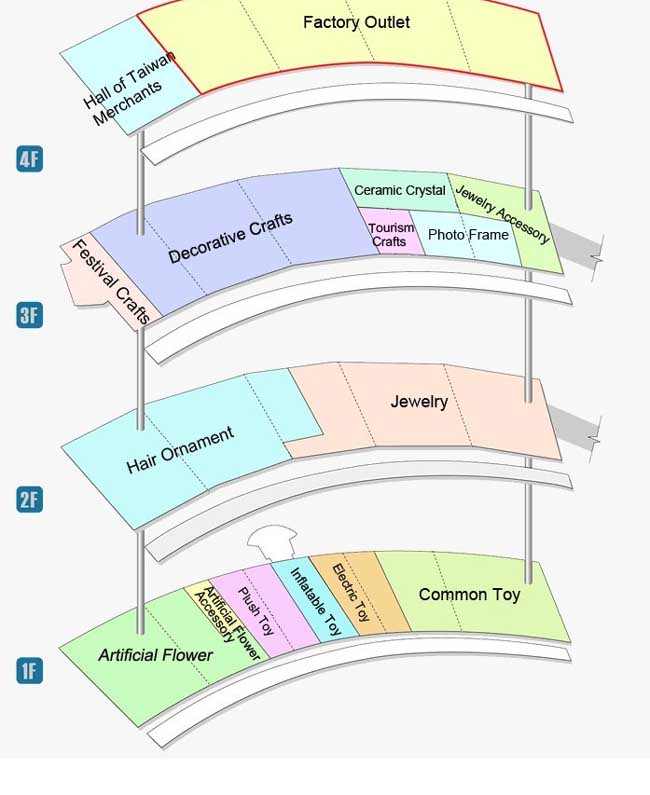
Who District 1 is for
District 1 is especially useful for companies working with:
- gift shops, souvenir stores, and tourist gift outlets
- home décor and seasonal decoration chains
- toy stores and children’s product retailers
- shops for fashion accessories, jewelry, and hair accessories
- importers who want to mix many small items in a single container
If you’re still exploring which products might work on your market, walking through District 1 is a great way to see, on the spot, what sells, and how quality and prices differ between suppliers.
Practical visit tips
- Plan at least one full day just for District 1 – there are many booths and it’s easy to lose time without a plan.
- Focus on 1–2 product categories per day (for example, only flowers and decorations, or only toys).
- Take photos of booths, product codes, and business cards so you can compare offers later.
- Check the quality difference between the cheapest and better versions – price often follows build quality.
- Don’t rush to place deposits – first collect several offers, then negotiate final price and terms.
For a broader picture of how the whole Yiwu market works and how to plan your trip, see our main article Yiwu – the world’s largest wholesale market for small commodities.
Video and walk-through of Yiwu
If you want to see what Yiwu looks like in real life and what it’s like to walk through the halls, we recommend the article A walk through the Yiwu market with on-site photos and videos.
Frequently asked questions about District 1
Can you buy single pieces in District 1 or only wholesale?
District 1 is mainly a wholesale market, so most sellers work with minimum order quantities (MOQ) and wholesale packs. In practice, that means you rarely buy single pieces – you usually order by pack, box, or carton. Some booths do accept smaller quantities, but usually at slightly higher prices.
How much time do you need to visit District 1?
If you’re focused on one or two product groups, one full day of serious walking is the minimum. If you want to explore artificial flowers, toys, jewelry, and decorations at the same time, you can easily spend two days visiting enough booths and comparing offers.
Is District 1 good for testing new products for my market?
Yes, District 1 is excellent for testing – in one place you see many versions of the same product, from the cheapest to higher quality ones, and you can quickly decide what makes the most sense for your customers. It’s important to have rough budgets and target prices for your market in mind beforehand.
Do I need an agent to buy from District 1?
An agent is not mandatory, but in practice very helpful, especially if it’s your first time in Yiwu or you don’t speak Chinese. A local agent can help with communicating with suppliers, negotiating, consolidating goods from multiple booths, and checking quality before the goods are shipped to your country.
More articles about the Yiwu market
If you want to move from a general overview of the Yiwu market to specific halls, products, and visit planning, take a look at these articles:
Main overview
-
Yiwu – main guide
Yiwu basics: how to get there, where to stay, how to navigate, negotiate, and prepare for your visit.
International Trade Mart
-
District 1 – flowers, toys, decorations
Hall layout, where categories are located, and tips for negotiating with suppliers. -
District 2 – tools, hardware, electrics
Tools, auto accessories, garden products, batteries, and lighting – how to plan your visit. -
District 3 – office and fashion
Office supplies, sports equipment, cosmetics, eyewear, and fashion accessories. -
District 4 – footwear and home products
Footwear, socks, home textiles, and household products. -
District 5 – home textiles and gifts
Bedding, towels, curtains, home textiles, and business gifts.
Additional Yiwu markets and tips
-
Huangyuan Market
A specialized market in Yiwu for clothing and textile products. -
A walk through the Yiwu market
The world’s largest wholesale market: what Yiwu International Trade City looks like, what you can find, how to negotiate, and how to organize your visit.
Supplier Guide
Finding and verifying suppliers
How to systematically find suppliers and check whether they’re truly reliable before you start working together.
How to choose a manufacturer in China
Practical criteria for choosing a factory once you’ve narrowed down your supplier list.
The Most Cost-Effective Way to Buy from China
Compare three buying options - cheap(B2C), cheaper(bulk on Alibaba), and most cost-effective(local factories + China agent).
How to Negotiate with Chinese Suppliers
A practical guide to negotiating with Chinese suppliers, with a focus on preparation, cooperation terms, and getting the right price.
MOQ and hidden import costs
What MOQ means, how to negotiate it, and which additional costs you should plan for before ordering.
Choosing Products to Import from China
Go back to our guides on finding profitable products and learn which regions of China specialize in different product categories.
← Back to Product SelectionCustoms and Import Regulations
Once you've selected a supplier, the next step is understanding HS codes, customs duties, product origin requirements, and the paperwork needed for importing.
Continue to Customs →Back to: ← China Supplier Guides
Back to: ← China Sourcing Hub